Signage is defined as the physical extension of your practice’s brand identity, translating visual elements like color, typography, and logo into the built environment where patients first form impressions. The role of signage in practice branding goes far beyond a name on a door. It shapes how patients navigate your facility, how they feel while doing it, and whether they trust you before a single clinical interaction occurs. Research from Frontiers in Medicine confirms that wayfinding signage reduces patient anxiety and improves satisfaction by addressing diverse user needs. For independent practices competing against well-funded health systems, that is not a cosmetic detail. It is a strategic asset.
How signage functions as physical brand language in your practice
Signage is not decoration. It is what branding experts call physical brand language, the integration of form, scale, color, and tone into the spaces patients actually occupy. When your exterior monument sign, lobby wall graphics, and directional plaques share the same color palette and typographic style, patients register that coherence subconsciously. It signals that someone is in charge, that the practice is organized, and that care will follow the same standard.
The Sign Pack’s expert commentary on branded environment design makes this explicit: signage must integrate brand attributes consistently to deliver a meaningful visitor experience. Inconsistency, even minor inconsistency, erodes that signal. A lobby sign in navy blue paired with directional signs in teal and a parking placard in black reads as fragmented. Patients may not articulate why they feel uneasy, but the data shows they feel it.

The Northeast Georgia Medical Center (NGMC) Green Tower project is the clearest real-world proof of this principle. Miller EG Design implemented a tower-wide signage system that aligned interior and exterior signs with NGMC’s visual identity, including brand colors, iconography, and material choices. The result was a facility where patients could orient themselves quickly and where every touchpoint reinforced the same brand story.
Key elements of physical brand language in medical signage include:
Pro Tip: Audit every sign in your facility with a camera and lay the photos side by side. If they look like they came from three different practices, your brand is leaking.
How does signage affect patient experience and navigation?
Wayfinding is the process by which patients orient themselves and move through your facility. Poor wayfinding is not a minor inconvenience. A 2026 Frontiers in Medicine review confirms that therapeutic wayfinding models reduce anxiety and improve navigation outcomes by centering diverse user needs, including patients who are elderly, anxious, or unfamiliar with medical environments.
Here is why that matters for your practice specifically:
The signage impact on branding here is direct: a patient who navigates your facility with ease associates that ease with your competence. A patient who gets lost associates that frustration with your care quality, even if the clinical encounter is excellent.
What signage types work best for medical practice branding?
Not all signs serve the same purpose. The importance of signage in branding becomes clearest when you map each sign type to its specific function and brand contribution.
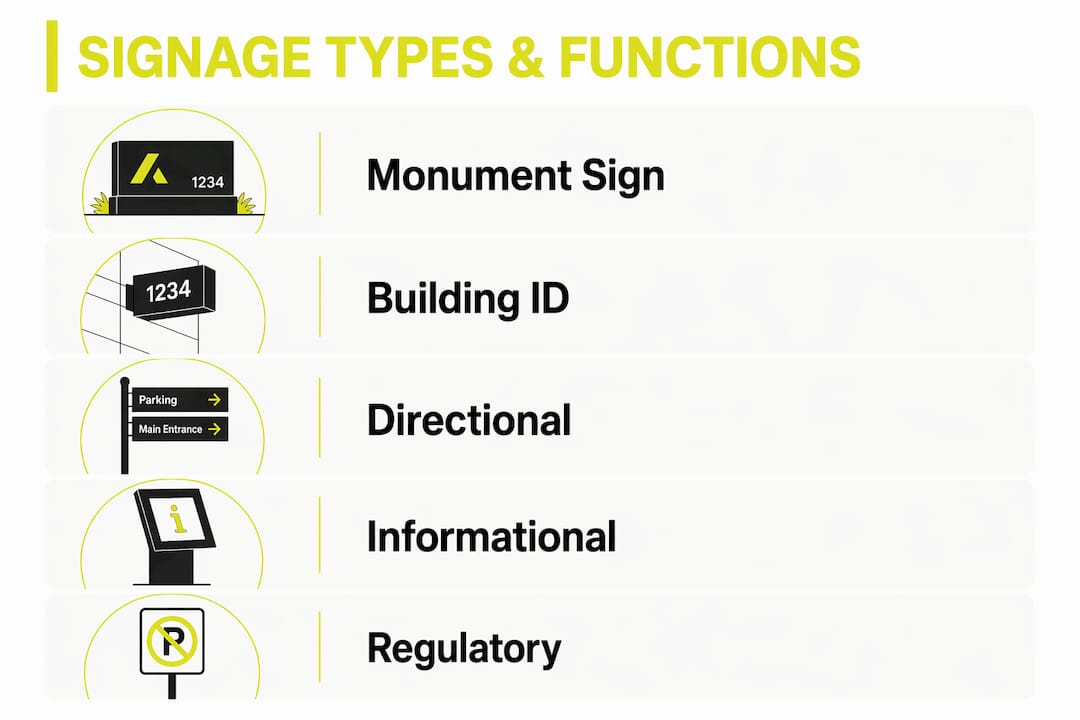
Sign TypePrimary FunctionPlacementBranding ImpactMonument / pylon signVisibility, first impressionExterior, street-facingEstablishes brand presence in the communityBuilding ID signLocation confirmationExterior facadeReinforces name recognition and professionalismDirectional / wayfinding signNavigationParking, lobbies, corridorsReduces anxiety, signals patient-centered careRoom / department identifierDestination confirmationDepartment entries, doorsSupports cognitive mapping, brand consistencyDigital display signDynamic messagingLobbies, waiting areasCommunicates brand values, health education, wait timesEmergency / safety signCompliance, safetyThroughout facilitySignals preparedness and regulatory adherence
Outdoor signage carries a disproportionate branding load. A 2026 National Morning Consult report found that 43% of adults seeing outdoor ads visit the location within 30 minutes. For a medical practice, that means a well-placed monument sign or illuminated building ID is not just a marker. It is an active patient acquisition tool.
Indoor signage, by contrast, does its heaviest lifting on retention and experience. Color coding, pictograms, and zone nomenclature work together to help patients build the spatial confidence that makes them more likely to return and refer others. The NGMC Green Tower project used shared color and iconography logic across its entire signage system to support exactly this kind of repeat-visit familiarity.
Effective signage strategies for branding in medical settings prioritize:
Best practices and common pitfalls in medical signage design
The most expensive signage mistake independent practices make is retrofitting. Signage added after construction is complete almost always compromises both function and brand coherence. Signs get placed where walls allow, not where patients need them. Materials get chosen for availability, not brand alignment. The result is a patchwork system that costs more to fix than it would have cost to plan correctly.
Branding through effective signage requires integrating the signage design process into architectural planning from the start. This means your brand guidelines, including color values, approved typefaces, and logo usage rules, must be in the hands of your signage designer before a single wall goes up.
Common pitfalls to avoid:
Pro Tip: Before finalizing your signage system, walk your facility as a first-time patient. Start from the parking lot. Note every moment you feel uncertain. Those are your true decision points, and that is where your signs belong.
How signage drives branding benefits beyond navigation
Signage works around the clock. Your building ID sign is visible at 11 PM when a prospective patient drives past after a long shift. Your monument sign is in the background of every photo a patient posts from your parking lot. This is the role of visuals in branding that most independent practices underestimate.
“Signage is your practice’s 24/7 brand ambassador. It communicates your professionalism, your values, and your presence in the community without requiring a single marketing dollar to activate it after installation.”
The local advertising reach of exterior signage is particularly valuable for independent practices that cannot match health system advertising budgets. A well-designed monument sign in a high-traffic location delivers consistent impressions to the same commuter population every day, building the kind of familiarity that drives first appointments.
Signage also embeds your practice in the community’s visual landscape. Patients who see your sign regularly before they ever need a physician are more likely to think of you first when they do. That is brand recall built entirely through physical presence, with no digital ad spend required. For practices focused on patient engagement and outreach, signage is the offline anchor that makes every other marketing channel more effective.
Key takeaways
Effective signage is the single most underutilized branding asset in independent medical practice, delivering patient acquisition, navigation clarity, and brand trust simultaneously when designed with intention.
PointDetailsSignage is physical brand languageEvery sign type must share consistent color, typography, and materials to build brand coherence.Wayfinding reduces patient anxietyTherapeutic, user-based signage placement at decision points lowers stress and improves navigation efficiency.Outdoor signs drive patient action43% of adults who see outdoor ads visit the location within 30 minutes, making exterior signs active acquisition tools.Validate with metrics, not aestheticsUse intelligibility evaluations and user journey metrics to confirm signage actually performs for patients.Plan signage before constructionRetrofitting signage after build-out compromises both function and brand alignment.
Why I think most practices are leaving signage money on the table
I have worked with independent practices at every stage, from pre-launch startups to established groups preparing for growth, and the pattern is consistent. Signage is treated as a facilities decision, not a branding decision. A practice owner spends months refining their logo, their website color palette, and their patient communication templates, then hands the signage spec to a contractor who sources whatever is available in the right size.
The result is a brand that exists beautifully online and falls apart the moment a patient pulls into the parking lot. That disconnect is not just an aesthetic problem. It is a trust problem. Patients notice when the physical environment does not match the promise the website made. They may not say so, but the healthcare brand identity research is clear: visual coherence across touchpoints is a direct driver of perceived competence.
What I have found actually works is treating signage as a brand investment with a measurable return, not a construction line item. That means bringing your brand guidelines into the signage planning process early, testing your wayfinding system with real patients before you open, and revisiting your exterior signage every three to five years as your practice grows and your brand matures. The practices that do this consistently attract more patients, retain them longer, and build the kind of community recognition that no paid ad can replicate.
Ready to make your practice’s brand work harder?
Independent practices that invest in cohesive signage and brand strategy do not just look more professional. They attract more patients, reduce staff time spent giving directions, and build the community presence that drives long-term growth.
At Digitalashagency, we specialize in branding and growth for independent medical practices, from pre-launch identity development to full signage strategy integration. Whether you are building a new practice brand from the ground up or refining an established practice’s patient experience, we bring the operational and creative expertise to make your physical and digital brand work as one. Explore our established practice audits to see where your signage and brand strategy may be leaving patients, and revenue, behind.
FAQ
What is the role of signage in practice branding?
Signage translates your practice’s visual identity into the physical environment, reinforcing brand recognition, guiding patients through your facility, and shaping their perception of your professionalism before any clinical interaction.
How does signage affect patient experience in medical settings?
Effective wayfinding signage reduces patient anxiety and improves navigation efficiency, as confirmed by a 2026 Frontiers in Medicine review emphasizing therapeutic, user-based wayfinding models.
What signage types have the biggest branding impact for medical practices?
Exterior monument and building ID signs drive first impressions and community visibility, while interior directional and department identifier signs reinforce brand consistency and support patient navigation.
How do you measure whether medical signage is working?
Intelligibility evaluation methods and user journey metrics, not design preference, are the validated tools for assessing signage performance, as demonstrated by the CiNii hospital outpatient signage study.
When should signage design be integrated into practice planning?
Signage design should be integrated during architectural planning, before construction begins, to place signs at true patient decision points and align materials with brand guidelines from the start.