Your medical practice’s physical address is a branding signal that patients read before they ever call your front desk. The role of office location in branding goes far beyond real estate convenience. It shapes whether patients perceive your practice as credible, stable, and worth their trust. A 2026 study found that location directly shapes brand image with a path coefficient of 0.336, and that brand image in turn drives patient decisions with a beta of 0.472. Where you practice tells a story. Make sure it is the right one.
How does office location shape brand image?
Office location functions as nonverbal marketing. Patients use spatial cues to form judgments about your professionalism before any direct interaction. A practice in a well-maintained medical office building signals stability. A practice in a strip mall next to a discount store signals something very different, regardless of the quality of care inside.
Prestigious commercial addresses boost credibility and subconsciously communicate professionalism to patients before their first appointment. This is not superficial. Patients are making risk assessments. They want to know that you will still be there in five years, that you take your practice seriously, and that you belong in the same category as other providers they already trust.

Location in a medical hub takes this further. Being surrounded by hospitals, specialty clinics, or diagnostic centers borrows credibility from the ecosystem and reduces the effort patients must spend proving to themselves that you are reliable. When two equally qualified practices compete for the same patient, location often becomes the tie-breaker.
The risk of mismatch is real. When your brand promise says “premium, patient-centered care” but your office is in a location that signals the opposite, you create cognitive dissonance. Patients notice that gap. Location misalignment disrupts patient expectations and undermines retention regardless of how good your clinical outcomes are.
Pro Tip: Before signing a lease, ask yourself: if a patient drove by this building without knowing it was a medical office, what would they assume about the business inside? That gut reaction is your brand signal.
Does accessibility affect patient loyalty and attraction?
Accessibility is not just about convenience. It is a brand statement. A practice that is easy to reach by public transit, has adequate parking, and sits near complementary healthcare services tells patients that you designed your practice around their needs. That message builds loyalty before the first appointment.
Research on proximity and retail location choice confirms that identity proximity is more influential than pure physical accessibility in driving loyalty. Patients favor locations that feel connected to their community and values, not just locations that are close to their home. A practice embedded in a neighborhood’s identity becomes part of how that community defines its healthcare.
Localness is a genuine competitive asset. Perceived localness drives brand loyalty more powerfully than being associated with a large national brand. Independent practices have a natural advantage here. A solo internist who has practiced in the same neighborhood for a decade has a community identity that no PE-backed clinic group can manufacture.
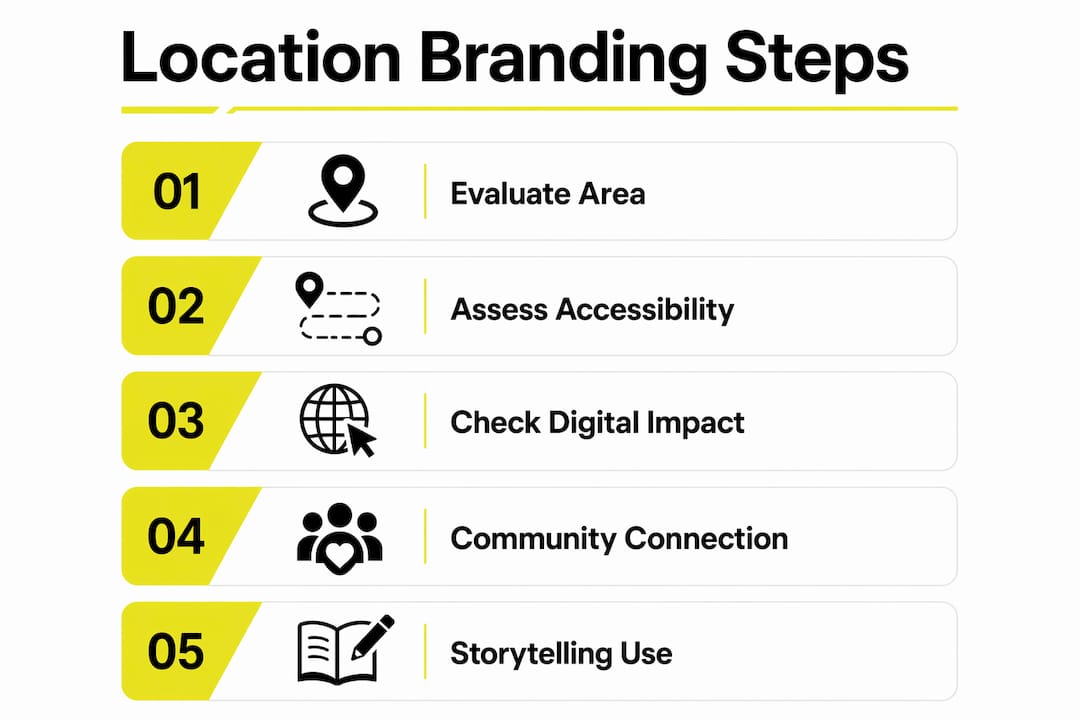
Here is a practical framework for evaluating accessibility as a branding factor:
Practices that invest in community outreach and engagement alongside a well-chosen location see compounding returns. The location opens the door. The community relationship keeps patients coming back.
Pro Tip: Do not evaluate a location solely on cost per square foot. Walk the neighborhood at different times of day. Talk to neighboring businesses. The qualitative feel of a location is part of your brand whether you account for it or not.
Is your office address a digital branding asset?
Your physical address does not stay physical. It propagates across Google Business Profile, Healthgrades, Zocdoc, your website footer, email signatures, and insurance directories. Every one of those touchpoints is a branding moment. A strong address reinforces your credibility. A weak or inconsistent one quietly undermines it.
Your business address directly impacts SEO, local search rankings, and patient trust across digital platforms. This is why local SEO for physicians is inseparable from location strategy. Google uses your address to determine which local searches you appear in. A prestigious, well-recognized address in a medical district can improve your local pack rankings compared to a residential or ambiguous address.
The halo effect of a physical location extends to digital performance. Opening a physical location in a new market can trigger a 37% regional web traffic boost and a 13.9% online sales increase for emerging brands. For a medical practice, that translates to more appointment requests, more profile views, and more organic search visibility in the communities you serve.
Location TypePhysical Brand SignalDigital Brand ImpactMedical office buildingHigh credibility, professional stabilityStrong local SEO, trusted directory listingsMixed-use commercial spaceAccessible, community-orientedModerate SEO, good for neighborhood searchesVirtual office addressPrestige without overheadImproved SEO over home address, limited physical trustResidential addressTransience, low professionalismWeak SEO, negative trust signals in directories
Virtual office addresses deserve a mention here. For practices in early growth stages, a registered address in a recognized commercial district can lend credibility and SEO benefits without the cost of a full lease. The trade-off is that patients who visit in person will notice the gap. Use virtual addresses strategically, not as a permanent substitute for a real clinical presence.
How do you choose the right location for your practice brand?
Location selection is a strategic decision, not an administrative one. The right location aligns your physical presence with your brand positioning, your patient demographics, and your long-term growth goals. Harvard Business Review noted in 2026 that knowledge campus locations convert office location from a cost center into a brand asset by embedding practices in ecosystems with transit access and complementary services.
Here is a practical evaluation framework:
The risks of misalignment compound over time. A practice that opens in a declining area may attract patients initially but will struggle to retain them as the neighborhood’s identity shifts. Conversely, a practice that plants itself in an emerging neighborhood before it peaks can build deep community roots and patient retention advantages that later arrivals cannot replicate.
Pro Tip: Use your location as raw material for brand storytelling. A practice in a historic neighborhood can lean into that heritage. A practice near a university can position around innovation and research. The neighborhood gives you material. Use it.
Key takeaways
Office location is a persistent, multi-channel branding asset that shapes patient trust, loyalty, and digital visibility before any clinical interaction occurs.
PointDetailsLocation signals brand before first contactPatients read spatial cues to assess professionalism and stability before calling or visiting.Identity proximity drives loyaltyPatients favor practices embedded in their community’s identity, not just those closest to their home.Address impacts digital performanceA strong commercial address improves local SEO rankings and trust signals across directories like Google and Healthgrades.Mismatch erodes retentionA location that contradicts your brand promise undermines patient trust regardless of clinical quality.Location is a strategic, not administrative, decisionEvaluate community profile, building quality, accessibility, and neighborhood trajectory together as brand factors.
What i’ve learned watching practices get location wrong
I have worked with enough independent practices to say this plainly: location is the most underestimated branding decision most physicians make. They treat it like a logistics problem. Find a space, check the square footage, sign the lease. Then they spend years wondering why their marketing is not converting.
The practices I have seen transform their patient attraction fastest are the ones that treated location as a brand statement from day one. One primary care physician I worked with moved from a dated office park to a mixed-use building in a walkable neighborhood. The clinical quality did not change. The brand perception changed overnight. New patient inquiries increased, Google reviews improved in tone, and the practice started appearing in local press coverage tied to neighborhood events.
The uncomfortable truth is that patients do not separate where you practice from how you practice. The building, the neighborhood, the parking lot, the signage, all of it feeds into a single impression. If you are an independent practice competing against well-funded clinic groups, you cannot afford to let location work against you. You need it working for you.
Integrate your location into your broader marketing strategy. Your address should appear consistently across every digital touchpoint. Your neighborhood should show up in your content. Your community relationships should be visible. Location is not a one-time decision. It is an ongoing brand asset you either invest in or neglect.
How Digitalashagency can help you turn location into a brand asset
Your office location is already sending a message to patients. The question is whether that message aligns with the practice you have built.
Digitalashagency works with independent medical practices to build brands that attract the right patients and hold their loyalty. From private practice startup branding to full marketing audits for established practices, we help you connect every brand signal, including your location, into a strategy that works. If your location is an asset you have not fully used, or a liability you need to address, we can help you figure out the next move.
FAQ
What is the role of office location in medical branding?
Office location is a nonverbal brand signal that communicates professionalism, stability, and community alignment to patients before any direct interaction. Research shows location directly shapes brand image with a path coefficient of 0.336, which in turn drives patient decisions.
How does a prestigious address affect patient trust?
A prestigious commercial or medical hub address boosts perceived credibility and signals professionalism subconsciously. It often becomes the tie-breaker when patients choose between two equally qualified practices.
Can my office address hurt my local SEO?
A residential or inconsistent address weakens your Google Business Profile rankings and reduces trust signals across directories like Healthgrades and Zocdoc. A recognized commercial address in a medical district strengthens local search visibility.
How does community location affect patient retention?
Patients favor practices with identity proximity, meaning locations that feel connected to their community and values. Perceived localness drives brand loyalty more powerfully than association with a large national brand, giving independent practices a real competitive edge.
Should i use a virtual office address for my practice?
A virtual office address in a recognized commercial district improves SEO and credibility over a residential address. It works as a short-term solution for early-stage practices, but patients who visit in person will notice the absence of a real clinical space, so plan for a physical location as you grow.